
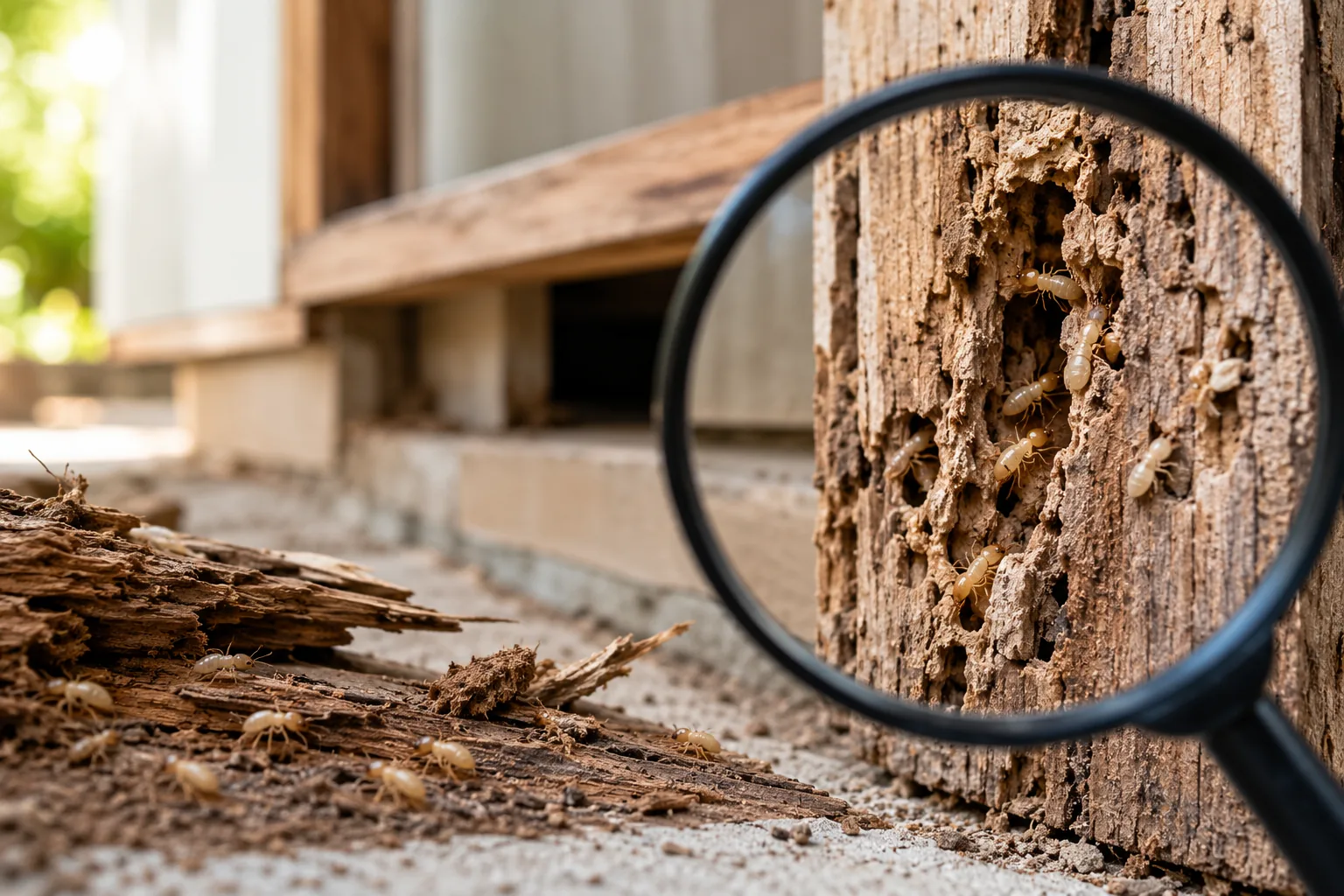
Old Termite Damage or Active Termites? Let’s Slow Down and Look at the Evidence
If somebody points to a stain on a block wall, a piece of damaged wood, or an old mud line and immediately says, “You have active termites,” please do not panic and sign a proposal before you understand what you are looking at.
I crawled under homes and performed termite inspections for more than 20 years. I have seen active termites, old damage, abandoned tubes, previously treated homes, and plenty of homeowners who were scared by something that had been sitting there for years. Old evidence and active activity are not the same thing. They may lead to very different conversations—and very different bills.
Now, I am not telling you to ignore termites. Absolutely not. Your home is probably your largest investment, and termites are not a pest you “wait and see” for six months. I am telling you to look at the evidence correctly, ask for documentation, and understand whether the inspector found a current problem, a past problem, or simply a reason to investigate further.
My honest rule: Do not let an old stain sell you a new treatment. But do not let one empty spot in a mud tube convince you the termites are gone, either.
First: What Is a Termite Mud Tube Actually Made Of?
Homeowners often call everything in termite damage “dirt.” That is understandable, because it looks like dirt. Subterranean termite tubes and packed material can contain soil, termite fecal material, and partially digested wood. The termites build this protected highway because they need moisture and protection while traveling between the soil and their food source.
So yes, termite material can include fecal matter—but it is not accurate to call every bit of mud or dirt you see pure termite feces. And the presence of old, dry material inside damaged wood does not prove termites are feeding there today. Evidence has to be considered together.
Signs That Damage May Be Old
Old termite damage is often extremely dry. The galleries may look weathered, dusty, or brittle, and you may find no live workers or soldiers. An abandoned tube can become dry and crumbly. On hollow block in a crawlspace, basement, garage, or other exposed area, a removed tube may leave a brown line or “etching” that stays visible for years.
This is where homeowners get into trouble. A stain can look dramatic, especially when somebody shines a flashlight on it and uses the word termites. But a stain is not a living termite. In my field experience, technicians commonly scraped visible tubes during treatment, and the shadow or stain remained behind. That can be evidence of previous activity or previous treatment—but the stain alone cannot tell you when treatment occurred. Ask for the treatment record, warranty, disclosure, or prior inspection report.
Old-looking damage is more convincing when several things agree:
- The wood and galleries are dry and brittle.
- No live termites are found during a careful inspection.
- Visible tubes are dry, broken, or clearly abandoned.
- There is documentation of a previous treatment or repair.
- A monitored opening is not rebuilt.
None of those clues should be used alone. Termites can move to another part of the structure, and an empty tube does not issue a written resignation letter. They do not make this easy for us.
What Active Termite Evidence Looks Like
Live cream-colored workers or soldiers are direct evidence. A fresh, intact, moist-looking mud tube running from the soil into the structure is also a serious warning. If an inspector opens a small section and termites are inside, the question is answered.
If no termites are visible in that exact opening, do not assume the tube is inactive. The colony may be using another section, the workers may have retreated, or the tube may be repaired after it is disturbed. A common monitoring step is to remove a small section and check over the next several days for live termites or rebuilding. That should be part of a full inspection—not a DIY excuse to tear every tube off the wall and destroy the evidence.
What I would take seriously: a newly formed or repaired tube, moisture inside the tube, live termites, fresh shelter material in damaged wood, or indoor swarmers. If a clean, intact tube is traveling from the ground into the house, I am not brushing that off because nobody happened to be standing in the inch that was opened.
Old Versus Active: A Quick Homeowner Comparison
| What you see | What it may mean | What to do next |
|---|---|---|
| Dry, brittle damage with no live termites | Possibly old activity | Check treatment history and inspect the full structure |
| A flat stain or tube “shadow” on block | Evidence a tube was once present | Do not call the stain active without current evidence |
| Fresh intact tube, live workers, or rebuilding | Strong evidence of current activity | Arrange a licensed inspection and treatment plan |
| Termites in mulch, a stump, fence, or deck | Termites are present on the property | Inspect the home; outdoor activity alone does not prove structural infestation |
“But My House Was Treated Before”
A previous treatment matters, but it is not a force field. Liquid termiticides can remain effective for years, and some properly applied treatments may perform longer than the minimum periods used for product registration. The actual life depends on the product, application, soil, construction, disturbance, and site conditions.
Heavy water movement, flooding, excavation, additions, plumbing work, or disturbed treated soil can affect the protective zone. That is why I want to see the product name, treatment diagram, date, warranty terms, and renewal history—not just hear, “Somebody treated it a long time ago.” Ten years is not a universal promise for every chemical at every house.
What If You Find Termites in the Yard, Mulch, Fence, or Deck?
Subterranean termites naturally live in soil. Colonies can contain huge numbers of termites and forage a surprising distance, but colony size and density vary by species and location. I am not going to give you a dramatic “exact number per acre” because nature did not sign that contract.
If you find termites in mulch, a stump, landscape timber, a fence, or a deck near your home, it does not prove they are inside the house. It does prove termites are on the property and your house deserves a thorough inspection—especially if it has never been treated, has wood-to-soil contact, moisture problems, concealed foundation areas, or no current warranty.
This is where prevention becomes a reasonable conversation. Ask what risk factors the inspector found, what treatment options exist, what each option covers, and what documentation or monitoring comes with it. Do not buy a treatment because somebody found one termite under a piece of mulch. Do not ignore the house because that termite happened to be outside, either.
Why Slab Homes and Finished Basements Make Me Nervous
I am going to be direct: concealed construction makes termite inspection harder. A slab home sits close to the soil, and termites may enter through cracks, expansion joints, utility penetrations, plumbing areas, or hidden edges. If everything is finished, an inspector cannot see through drywall. Sometimes the garage or an exposed block area is the only useful view—and sometimes even that is limited.
Finished basements create the same basic problem. The foundation is below grade, and walls or ceilings may cover the block, sill plate, floor system, and entry points. An unfinished basement gives the inspector more to see. A finished basement gives termites privacy, and termites love privacy.
People living on slabs or with finished basements may not notice activity until swarmers appear, trim changes, paint bubbles, or damage reaches a visible surface. By then, repairs can become part of the bill. That is why I strongly encouraged homeowners with concealed construction to discuss prevention and regular inspections instead of waiting for visible damage.
That is my field recommendation—not a claim that every home already has termites. Any home in termite country can be attacked, and the less inspectors can see, the more important a thoughtful prevention plan becomes.
Preventive Treatment Can Cost Less Than Waiting for Active Damage
A preventive treatment is not automatically cheap, and prices vary by construction, linear feet around the home, access, product, and company. But treating a home before there is active activity can be less complicated than a remedial job involving drilling, inaccessible areas, damaged materials, repairs, and urgent labor.
If active termites are found, ask the company to separate the costs:
- Termite treatment
- Repairs, if any
- Monitoring or bait stations
- Warranty and annual renewal
- Optional moisture or construction corrections
Everything should not be bundled into one frightening number with no explanation. Protecting your home is smart. Paying for mystery work is not.
Questions I Want You to Ask Before Approving Treatment
- Did you find live termites, a repaired tube, indoor swarmers, or only old damage?
- Can you show me the exact evidence and location?
- Is this a stain from a removed tube or a current intact tube?
- Was the home treated before, and can we obtain the treatment record?
- What product and treatment method are you proposing, and why?
- Which areas will be drilled, trenched, treated, or monitored?
- What does the warranty cover, and what annual fees keep it active?
- Are repairs documented as necessary, or are they optional?
My Bottom Line
Old termite damage can be dry, brittle, empty, and accompanied by old tube stains that remain visible for years. Active termites may show up as live workers, fresh or repaired mud tubes, moist shelter material, or indoor swarmers. But one clue rarely tells the whole story.
If somebody found a fresh tube entering your home, take it seriously. If somebody found only a faded line on a block wall, ask for more evidence before paying for another treatment. If termites are in the yard, inspect the house and discuss prevention based on the actual risk. And if you live on a slab or have a finished basement, remember that “nothing visible” and “nothing there” are not the same sentence.
I believe in termite treatment. I recommended preventive treatment many times in the field because I have seen what termites can do when they work unseen. I also believe homeowners deserve to know whether they are looking at current activity, old history, or a sales presentation built around fear.
Protect your biggest investment—but understand what you are approving first.
— Rosemary West
Founder, Before You Approve™