
You May Be Able to Handle More Pest Control Than You Think
I spent more than twenty years in pest control, crawling under homes, treating pests, inspecting properties, and seeing exactly what companies use. Here is something most homeowners are never told: many of the products the pros use are available on Amazon. You are not automatically paying a company for access to some secret pesticide. A lot of the time, you are paying for someone to identify the pest, choose the product, and know where to put it.
I am not going to tell you that every pest problem is easy. It is not. But I am going to tell you the truth: homeowners waste a ridiculous amount of money on weak products, random sprays, and recurring contracts because nobody explained what actually works. If you can identify the pest, follow a label, use the right product in the right place, and be patient enough not to ruin the treatment, you can handle more than you think.
Rosemary’s rule: The label is the law. Read the complete label before buying, mixing, applying, storing, or disposing of any pesticide. The label—not this article, a social-media post, or a product review—controls where and how that specific product may be used.
What “Professional-Grade” Actually Means
When I say professional-grade, I mean products used in the pest-control industry—not another flashy bottle making big promises in a home-improvement aisle. Many products homeowners reach for first are contact killers or short-term fixes. They may kill what you can see and make you feel like something happened, but that is not the same as solving the infestation. One widely available exception is TERRO Liquid Ant Bait. It can work. It uses a baiting strategy similar to products used by professionals, although Advion Ant Gel is the product I prefer and one that professionals commonly use.
These products are not toys. Professional-grade does not mean “use more.” It means identify the pest, measure correctly, wear the required protective equipment, and apply only where the label allows. The responsibility comes with the product.
Odorous House Ants: Stop Killing the Ants You Can See
Odorous house ants are the tiny ants people call little black ants, brown ants, sugar ants, or just “those little ants all over my kitchen.” You may also see them in the bathroom because they love moisture. The colony you are fighting may be inside a wall void, in crawlspace insulation, or somewhere outside. You usually cannot see the nest, and that is exactly why killing the ants in front of you does not fix the problem.
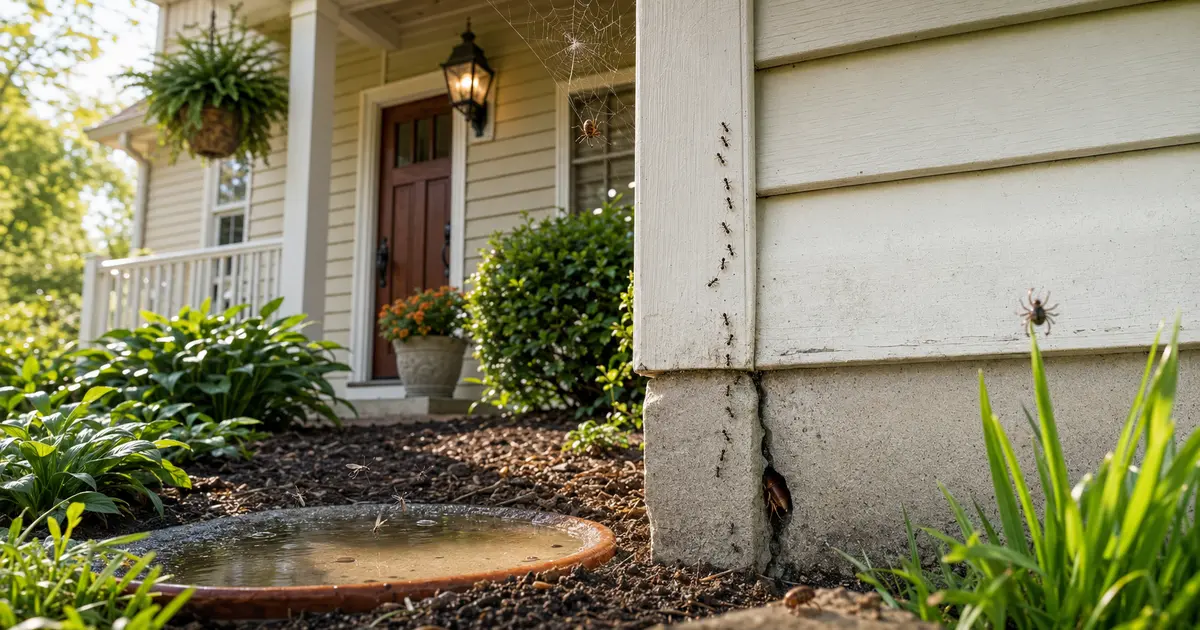
First, find the trail. Look under sinks and around windows, plumbing, countertops, and baseboards. Then walk around the foundation. If you see ants trailing up the foundation, that trail is telling you how they are entering. Place a pea-sized dot of Advion Ant Gel directly beside the active trail at the spacing and on the surfaces allowed by the label. If the trail is indoors, place the bait where the ants are already traveling and where children and pets cannot reach it.
I like doing this in the evening because the feeding activity can become intense. You may come back and see hundreds or even thousands of ants. It can freak you out, but that is what you want. They found the bait. Do not grab Raid. Do not spray them. Do not wipe away the trail. The workers need to digest the bait, return to the colony you cannot see, and distribute it through the colony. The trick is not killing the ants that are doing the work for you.
TERRO Liquid Ant Bait can work if the ants accept it, but Advion Ant Gel is what I would reach for first. Keep contact killers away from the bait and correct leaks or moisture that keep pulling ants back.

Syngenta Advion Ant Gel
My preferred bait option for properly identified, bait-accepting ants. Let the workers feed and do not contaminate the bait with repellent sprays.

TERRO Liquid Ant Killer Bait Stations
A convenient consumer bait that can work well when ants accept it. Bait preference can change, so monitor whether the ants are actively feeding.
General Household Insects: Use a Targeted Treatment, Not a Random Spray
Temprid FX is one of those products that can cover a long list of labeled pests, including ants, carpenter ants, cockroaches, spiders, centipedes, silverfish, firebrats, clothes moths, carpet beetles, crickets, earwigs, flies, gnats, and mosquitoes. That does not mean you walk through the house spraying everything. Find the pest, find where it lives or enters, mix exactly according to the label, and put the product where it will matter.
A good sprayer matters because bad pressure and a sloppy pattern waste product. The PetraTools HD4000 Battery-Powered Backpack Sprayer gives you controlled, consistent application. Dedicate it to pesticide work, mark it clearly, and never use it for anything else. For small preventive crack-and-crevice work on labeled sites, BASF PT 221L is another useful ready-to-use option.

Temprid FX Insecticide
A versatile concentrate for numerous labeled pests and application sites. Measure, mix, apply, and reapply only as the current container label permits.

PetraTools HD4000 Battery-Powered Backpack Sprayer
A quality sprayer helps produce consistent pressure and controlled placement. Dedicate pesticide equipment to pesticide use and label it clearly.

BASF PT 221L Pressurized Insecticide
A ready-to-use aerosol intended for labeled spot and crack-and-crevice applications. Keep it out of food-contact areas unless the label specifically directs otherwise.
Spiders: Dewebbing and Monitoring Matter
Spiders are different. In the pest-control world, we joke that spiders “have their shoes on” because they can walk right over a treated surface on those long legs. They do not groom themselves like roaches, so they are not picking pesticide off their bodies and swallowing it. If the product never reaches the spider’s body, especially the underside, it may do very little. That is why spraying alone disappoints so many homeowners.
Dewebbing is the key. Use the LAANPOLE 20-Foot Cobweb Duster to remove webs and egg sacs from eaves, corners, lights, door frames, and exterior hiding places. Yes, some webs will come back. Keep doing it. The more you disturb those nesting and web-building areas, the less comfortable your home becomes for spiders.
Here is one of my favorite tricks that most homeowners have never heard: if the Peppermint Oil Insect and Spider Repellent Spray label allows that application method, lightly treat the dewebber, deweb one side of the house, treat the tool again as directed, and repeat around the home. You are removing the web and leaving a scent spiders do not like in the same areas. This is not a substitute for the label, and you should never improvise with a product whose label does not permit use on the tool or intended surfaces.
For a labeled residual treatment, Tempo SC Ultra is excellent for spiders and many other insects. Concentrate on labeled entry points, especially doors and windows. I also like Catchmaster Max-Catch Glue Traps just inside doors, one along each side where appropriate. Spiders commonly enter and turn right or left along the wall. That path can take them directly into a glue board. Keep every glue board away from children and pets.

LAANPOLE 20-Foot Cobweb Duster
Long reach helps remove webs and egg sacs from exterior corners and high areas without unsafe climbing.

Peppermint Oil Insect and Spider Repellent Spray
A consumer repellent product—not a substitute for a labeled residual treatment. Use only for sites and methods stated on its label.

Tempo SC Ultra Insecticide Concentrate
A labeled residual option for certain pests and sites. For spiders, placement around approved entry points and harborages matters more than indiscriminate spraying.

Catchmaster Max-Catch Insect Glue Traps
Useful for monitoring along walls and near doorways. Place where children and pets cannot reach them and inspect regularly.
Fleas: Treat the Life Cycle, Not Just the Bites
Fleas are work. There is no magic spray that replaces the work. Vacuum, vacuum, vacuum. Vacuum the carpet, hard floors, baseboards, couches, under furniture, pet-resting areas—literally everything. The vibration also encourages protected pupae to emerge so the new adults can contact the treatment. Empty the vacuum securely when you finish.
For an indoor treatment, BASF PT Alpine Flea Treatment is designed for labeled indoor surfaces. Follow every preparation, ventilation, reentry, and repeat-treatment direction on the can. Outside, Talstar One can target labeled adult pests, while NyGuard IGR interrupts development of labeled immature stages. Mix or repeat products only when the current labels expressly allow it.
And no, you do not need to own a pet to get fleas. Birds, squirrels, deer, mice, wildlife, visiting animals, or previous occupants can bring them onto the property. An open door or window is enough for a flea to end up inside. Any pet treatment should come from a veterinarian or a product specifically labeled for that animal—never use a structural pesticide on a pet.

BASF PT Alpine Flea Treatment
A ready-to-use indoor flea product. Follow all preparation, ventilation, reentry, surface, and repeat-treatment directions on the can.

Talstar One Insecticide
An outdoor concentrate for many labeled pests. Rates and legal repeat intervals vary; protect water, pollinators, pets, and people exactly as the label directs.

MGK NyGuard IGR Concentrate
An insect growth regulator used to interrupt development of labeled pests. An IGR complements adult control; it does not replace sanitation, vacuuming, or pet treatment.
Mosquitoes and Ticks: Manage Adults, Habitat, and Larvae
Mosquito control is a three-part job: adult control, growth regulation, and larval control. Talstar One targets labeled adult mosquitoes and ticks. NyGuard IGR helps interrupt the development of labeled pests. Altosid Pro-G Mosquito Larvicide targets mosquito larvae in standing-water sites specifically allowed by its label. That is the same kind of complete thinking used in professional mosquito programs.
Empty water that does not need to be there. Clear gutters, refresh birdbaths, correct drainage, and look under planters, toys, tarps, and anything else that holds water. For water that cannot be removed, use Altosid Pro-G Mosquito Larvicide only when the label allows that exact site. Never assume a larvicide is safe for a koi pond, drain, wildlife habitat, or natural water because somebody online said it was. Read the container.
Talstar One Insecticide
The adult-control part of a label-compliant outdoor program for listed mosquitoes, ticks, fleas, and other pests.
MGK NyGuard IGR Concentrate
The growth-regulator part of the strategy for labeled pests. Use, mix, and repeat only as both labels permit.

Altosid Pro-G Mosquito Larvicide
For labeled mosquito-breeding sites that cannot be emptied. Match the site, dosage, and retreatment interval to the product label.
German Cockroaches: Do Not Bomb the House
For German roaches, do not bomb the house. Bombs kill what is exposed and push the rest deeper into wall voids and adjoining rooms. When the fog is gone, the roaches come back and the infestation can feel ten times worse. You need a targeted plan, not panic.
Advion Cockroach Gel Bait is my first choice. Put small labeled placements near activity—cabinet hinges, gaps, and protected areas behind appliances—never on food-contact surfaces. Then let the roaches run. I know that is hard when you see them, but roaches groom one another and travel through the hidden population. Spraying every roach you see can contaminate bait and work against the transfer you need.
For a heavier infestation, Tekko Pro IGR or Gentrol Point Source IGR Discs can help interrupt reproduction where their labels permit. Place Gentrol Point Source IGR Discs in labeled protected areas near appliances and activity. If you use Temprid FX, Tempo SC Ultra, or another residual, keep it away from gel placements unless both labels allow the combination and placement. Sanitation, dry sinks, repaired leaks, clean appliances, and patience still matter.

Advion Cockroach Gel Bait
Apply small labeled placements near active harborages such as cabinet hinges, gaps, and areas behind appliances—not on food-contact surfaces.

Tekko Pro Insect Growth Regulator
A concentrate used as part of an integrated program for listed pests. Tank mixing is allowed only when both labels permit the combination and application site.

Gentrol Point Source IGR Discs
Place units in labeled areas near activity and keep them inaccessible to children and pets. Follow the coverage and replacement interval on the package.
Safety Equipment Is Part of the Treatment
Do not skip PPE because you are at home. Read the label before opening the product. Depending on the formulation and application, you may need chemical-resistant gloves, long sleeves, long pants, closed shoes, eye protection, or a specific respirator. A basic dust mask is not automatically the right respirator. Keep pesticide measuring tools and sprayers separate from household equipment, never use food utensils, and keep every product in its original labeled container.
Remove or protect food, dishes, toys, pet bowls, aquariums, and sensitive belongings exactly as directed. Keep people and animals away for the full label-required period. Do not mix products because someone online said the combination “works amazing.” A mixture is acceptable only when the labels allow it.
Frequently Asked DIY Pest-Control Questions
Can homeowners buy the same pest-control products used by professionals?
Many of them, yes. What homeowners cannot buy is the training that comes in the bottle. Identification, placement, measurement, safety, and patience determine whether the product succeeds.
Why did I see more ants after placing bait?
The trail may grow because workers have recruited more ants to the food source. If they are actively feeding, avoid disturbing the trail and follow the bait label. The goal is colony exposure, not immediate destruction of visible workers.
Can I spray ant bait or cockroach bait to make it work faster?
No. Spraying on or near bait can contaminate it, repel pests from it, or kill the workers needed to transfer it. Keep bait and sprays separated according to their labels.
Why do spiders keep returning after I spray?
Web sites, egg sacs, lighting, entry gaps, and food insects may still be present. Dewebbing, exclusion, monitoring, and reducing prey are essential parts of long-term spider management.
Can fleas appear in a home without pets?
Yes. Wildlife, rodents, previous occupants, visiting animals, or fleas carried inside can introduce them. Confirm the pest before treating because several small biting insects are mistaken for fleas.
Should I use a bug bomb for German roaches?
I do not recommend building a German-roach plan around foggers. Targeted bait, monitoring, sanitation, moisture correction, and labeled growth regulators are more focused on the places cockroaches actually live.
What does “the label is the law” mean?
Use the product only for listed pests, sites, application methods, rates, intervals, and conditions. If this article and a label ever appear to conflict, follow the label.
My Honest Bottom Line
Yes, homeowners can save money and handle many ant, spider, flea, mosquito, tick, roach, and general pest problems themselves. The products above are professional products. This is what the pros use. The only consumer product in this guide that I did not use professionally is TERRO Liquid Ant Bait, and I included it because it can work.
The secret is not owning more chemicals. It is knowing when to bait, when to spray, when to vacuum, when to deweb, when to treat standing water, and when to leave the insect alive long enough to carry the product where you cannot reach. That is the part most product shelves never explain.
Read the label before you buy. Follow it when you mix and apply. Give the treatment time to work before dumping another product on top of it. That is how you stop wasting money and start treating the actual problem.
— Rosemary West
Founder, Before You Approve™
Understand the problem. Choose the right solution. Stop paying for what your home does not need.